Choose the juice first
Orange juice varies widely in sweetness and acidity. At the same 50 ml dose, one juice can support espresso while another already tastes sharp before coffee enters the glass.
Taste the juice cold. Use 5 ml vanilla syrup when it is rounded and clearly sweet, or keep 10 ml when the juice is tart. This decision saves more material than trying to solve everything through bean selection.
Published brand recipes span a wide range. De’Longhi uses 300 ml fresh juice with one espresso, creating a juice-led drink. Nespresso Professional’s Orange Freshpresso uses 40 ml coffee, 50 ml juice, 10 ml vanilla syrup, and 90 g ice. The smaller version is more useful when you are still deciding whether you like the combination.
Chill the coffee, then stir after viewing the layer
Brew 40 ml espresso and expose it to part of the ice. Swirl for several seconds. Lowering the temperature limits rapid ice melt and softens the immediate sour-bitter contrast.
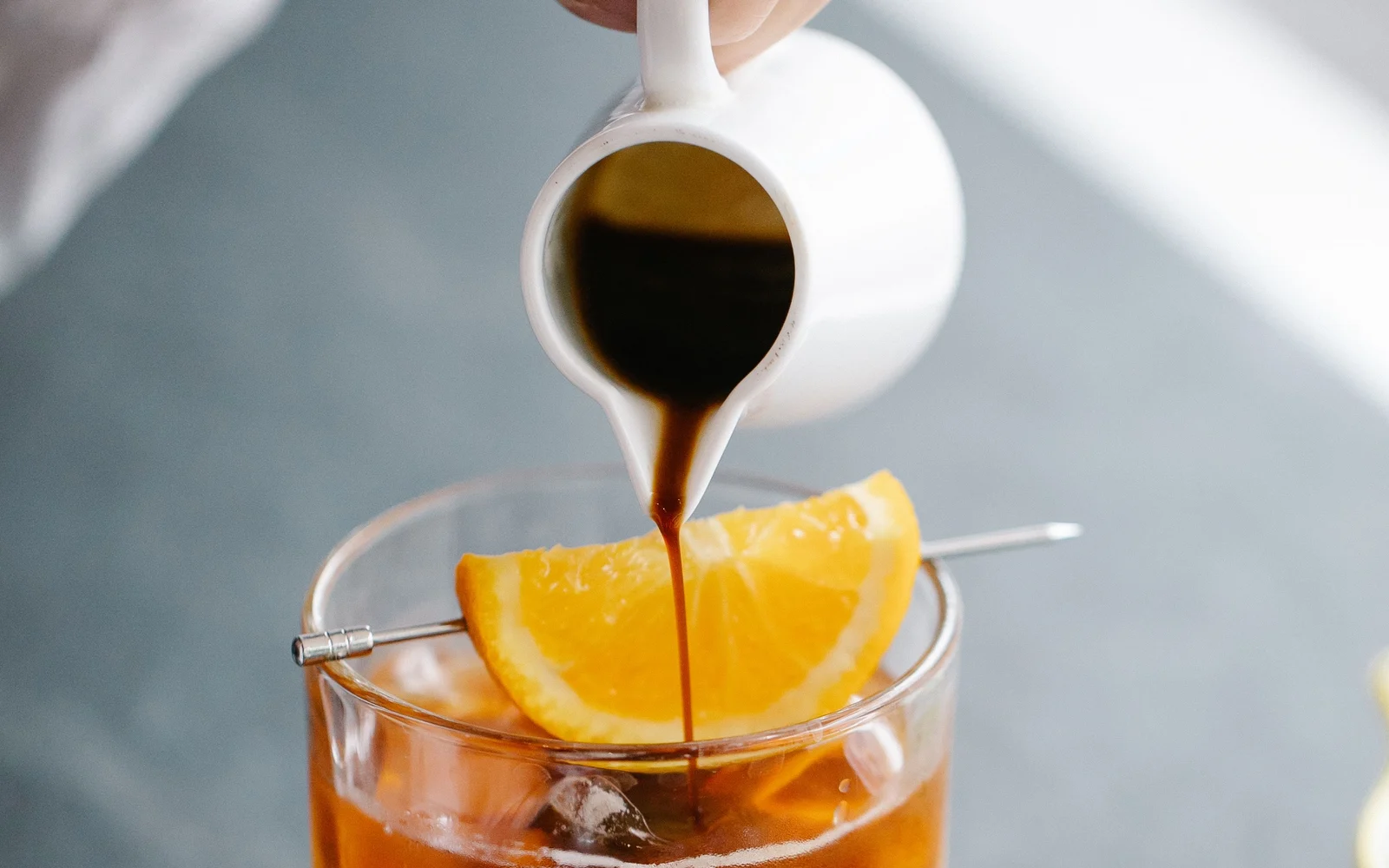
Add 50 ml juice, syrup, and the remaining ice to a clear glass. Pour the cooled coffee slowly over the ice. Enjoy the layer briefly, then stir gently before drinking. Sampling only the top makes the coffee feel aggressive and leaves sweet juice at the bottom.
Without an espresso machine, use 40 ml strong moka-pot coffee or cooled concentrated pour-over. A full Americano brings too much water and spreads every flavor thin.
Do not enlarge a sour and bitter result
When sourness and bitterness arrive together, check the juice and extraction. Keep 10 ml syrup for tart juice. Replace an over-extracted shot or reduce it to 30 ml. More coffee increases bitterness, while more juice simply creates a larger version of the same problem.
Coffee-only bitterness points toward dose or extraction. A thin drink points toward weak coffee or rapid melting. Hard ice, a chilled glass, and a small amount of concentrated coffee matter more than another pour of vanilla syrup.
This drink is allowed to lose the vote
Public coffee discussions include both loyal fans and people who still dislike the combination after several attempts. Citrus aroma, fruit acidity, and roast bitterness make it more demanding than a latte.
The small recipe keeps the decision inexpensive. If you enjoy it, reduce the syrup or add 30-50 ml sparkling water. If you do not, drink the remaining coffee and juice separately. There is no reason to train yourself into liking it.
Recipe reference
Keep this recipe handy
Ingredients
- 40 ml espresso
- 50 ml chilled orange juice
- 10 ml vanilla syrup, reduced to 5 ml when the juice is naturally sweet
- About 90 g ice
Tools
- 250 ml clear glass
- Jigger or marked cup
- Small shaker or heat-safe cup for chilling the coffee
Method
- Chill the juice and glass. Taste the juice first and keep the full 10 ml syrup if it is distinctly tart.
- Brew 40 ml espresso and immediately expose it to part of the ice. Swirl for several seconds to lower its temperature.
- Add 50 ml orange juice, vanilla syrup, and the remaining ice to the serving glass.
- Pour the chilled coffee slowly over the ice. Keep the layers briefly for presentation, then stir gently before drinking.
- Taste before correcting. Add 5 ml syrup or choose sweeter juice for sharp acidity; reduce the coffee for intrusive bitterness.
Use what you have
- No espresso machine: use 40 ml strong moka-pot coffee or a cooled concentrated pour-over. A full mug of Americano will spread the flavors too thin.
- No syrup: begin with naturally sweet chilled juice and keep the batch small; the result will be more direct and may taste more acidic.
- Sparkling version: after the small-batch test, add 30-50 ml chilled sparkling water and move to a larger glass.
If the result is off
- Both sour and bitter: hot espresso met tart juice without enough sweetness; chill the coffee and retain 5-10 ml syrup.
- Coffee overwhelms the orange: the dose is too large or the extraction is bitter; reduce coffee to 30 ml instead of enlarging the whole drink.
- Thin and watery: the ice melted rapidly or a full Americano replaced espresso; use hard ice and concentrated coffee.
- The layered drink tastes unbalanced: the first sip is almost all coffee; stir gently after the photo.
Cost and effort
The test uses only 50 ml juice and one espresso, so start with ingredients already at home rather than buying a large bottle of syrup for one drink.
FAQ
Does orange juice coffee taste very sour?
It can. Juice sweetness, coffee origin, roast, and extraction all matter. Chilling the coffee and keeping 5-10 ml syrup is more controlled than adding more coffee.
Why chill the espresso first?
Hot espresso melts ice quickly and makes the sour-bitter contrast feel more abrupt. Brief contact with ice narrows the temperature gap.
Can I omit vanilla syrup?
Yes. Start with sweet juice and a small batch. Tart juice may still need a little sweetness, but syrup is a correction rather than a universal rule.
What can replace espresso?
Use 40 ml strong moka-pot coffee or a cooled concentrated pour-over. Avoid substituting a full mug of standard-strength coffee.
Will orange juice curdle the coffee?
There is no dairy in this recipe, so the usual acid-and-milk protein curdling issue does not apply. Adding milk can cause visible separation.
Sources
- Nespresso Professional Orange Freshpresso
The published recipe uses 40 ml coffee, 50 ml fresh orange juice, 10 ml vanilla syrup, and 90 g ice, and chills the coffee with ice before assembly.
- De'Longhi Coffee Lounge Iced Orange Coffee
The published recipe uses 300 ml freshly pressed orange juice, ice, and one espresso, illustrating a much more juice-forward approach.