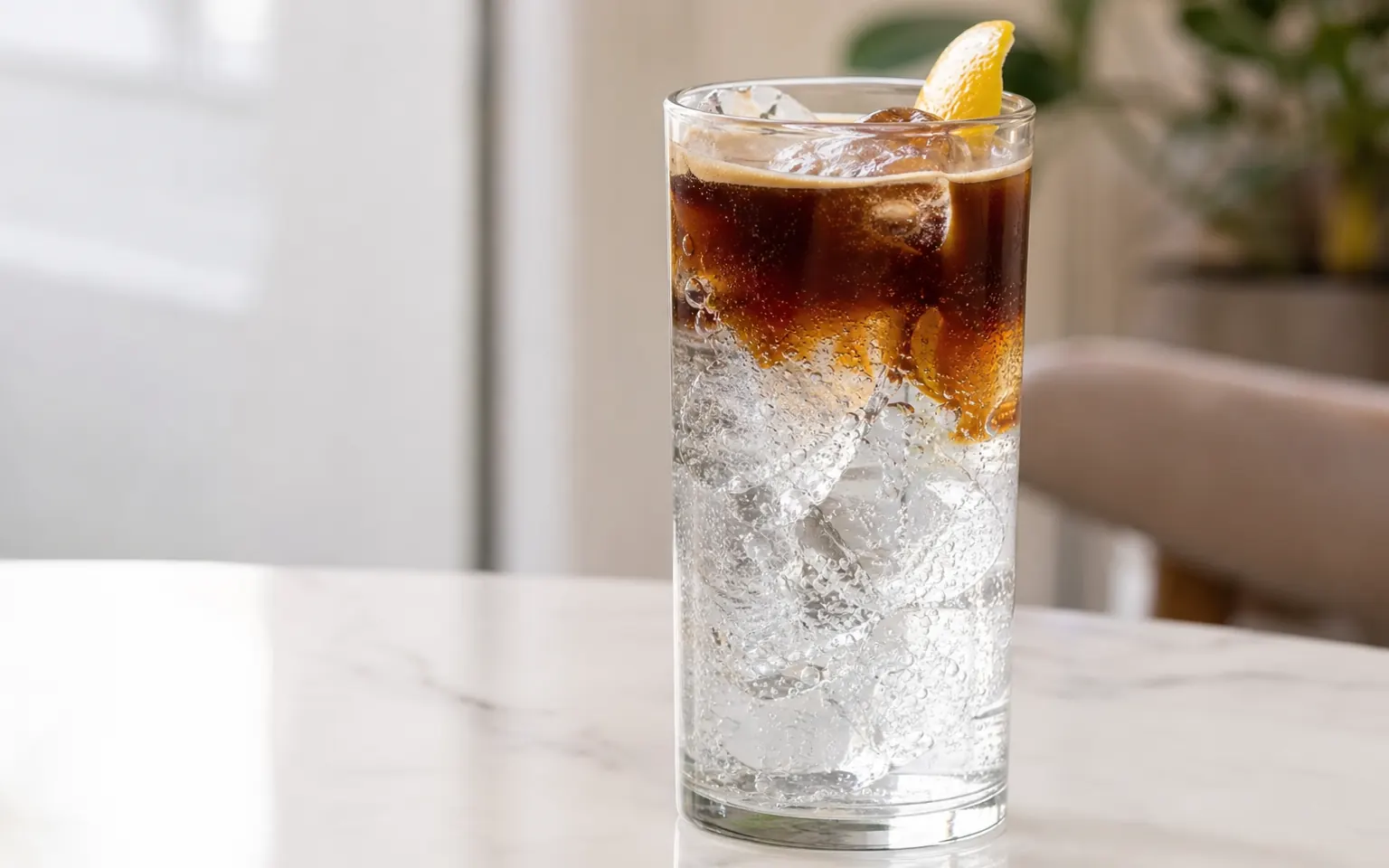
Three coffee bases produce different drinks
Plain sparkling water offers no sweetness or quinine bitterness to support the coffee. Stale flavor, rough extraction, and weak concentration become easier to notice. I care more about whether the coffee can handle dilution than about building a perfect visual layer.
Fresh espresso works at 40-50 ml after rapid chilling with a little ice. Concentrated cold brew works at 50-70 ml and gives a rounder result. Standard drip coffee or Americano is already diluted for drinking; adding another 120 ml soda usually leaves color and a thin bitter finish. When that is the only coffee available, reduce the soda instead of enlarging the whole drink.
Build the ratio after choosing the base
Fill a tall glass with firm ice. Add 120-160 ml cold sparkling water, then let 50-70 ml cold coffee run slowly over the ice. Adding the coffee last makes its strength easier to judge and disturbs the carbonation less.
Lift once from the bottom before drinking. The colors do not need to become uniform. Repeated stirring trades much of the carbonation for a tidier appearance.
Correct bitterness before adding sweetness
Carbonation makes roast bitterness and dryness more obvious. Reduce the coffee from 70 ml to 50 ml or choose a cleaner, less roast-heavy base. If only the edge needs rounding, 3-5 ml syrup is enough. Clearly burnt coffee will remain burnt under sugar.
A hollow drink needs concentration, not sweetness. Use cold-brew concentrate, reduce the soda, or drink that batch of coffee in its original format.
Sparkling coffee and tonic coffee have different jobs
Tonic brings its own sweetness and quinine bitterness. It creates a more structured long drink and can cover a little roughness. Plain soda stays cleaner and exposes more of the coffee.
Choose tonic when you want a bitter-sweet profile. Choose plain sparkling water for a light coffee aroma and crisp carbonation. Citrus peel can add aroma, but juice and syrup should remain small adjustments rather than turning the glass back into a sweet soda.
Recipe reference
Keep this recipe handy
Ingredients
- 120-150 ml (4-5 oz) chilled sparkling water
- 40-60 ml (1.3-2 oz) espresso or concentrated cold brew
- A full glass of ice
- Optional: 5 ml simple syrup or a strip of citrus peel
Tools
- Tall glass
- Measuring cup
- Long spoon, used sparingly
Method
- Chill all ingredients.
- Fill the glass completely with ice.
- Pour in sparkling water.
- Add concentrated coffee slowly over the ice.
- Taste before adding syrup or citrus.
Use what you have
- No espresso: use 50-70 ml cold-brew concentrate.
- Want bitterness and sweetness: use tonic water instead, which becomes a different drink.
- Want fruit aroma: use citrus peel or a few drops of juice, not a large squeeze.
If the result is off
- Too bitter: the coffee is too dark, over-extracted, or used at a high ratio. Reduce it before adding sugar.
- Watery: the coffee base is not concentrated enough. Use espresso or concentrate.
- Flat: warm ingredients or stirring released the gas. Chill first and stir once.
- Harsh acidity: choose a rounder coffee and avoid adding lemon juice.
Cost and effort
About US$0.75-2.50 per serving.
FAQ
What is the difference between sparkling coffee and espresso tonic?
Sparkling coffee uses plain carbonated water; espresso tonic adds sweetness and quinine bitterness.
Can I use regular drip coffee?
Only if it is brewed strong and cooled. Standard drip coffee often tastes thin after ice and soda.
Why is it bitter?
Carbonation can sharpen roast bitterness. Use less coffee or a rounder roast.
Should I add sugar?
Only after tasting. A small amount can round sharpness, but it should not replace a balanced coffee base.