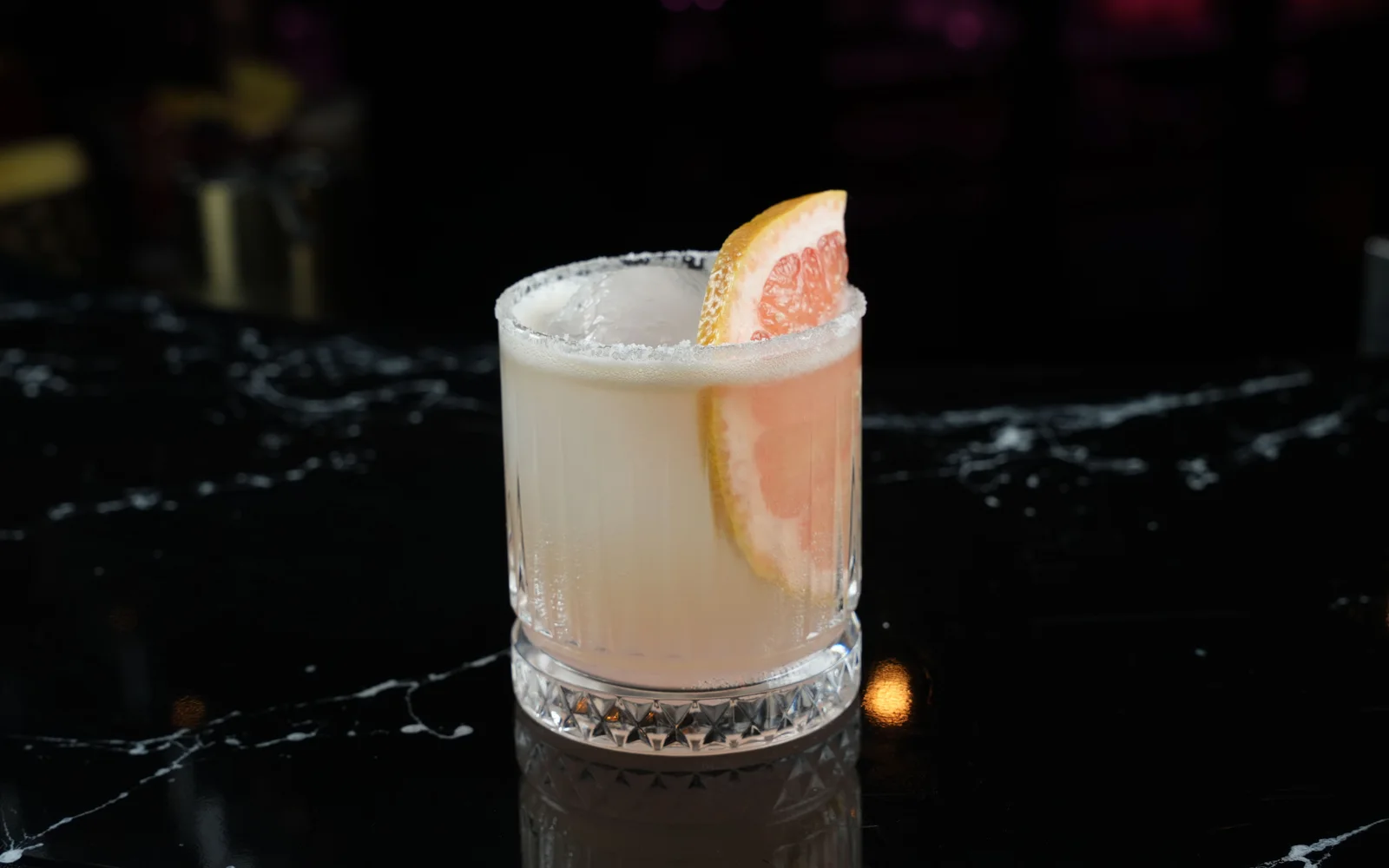
A Paloma looks almost too easy. Tequila, lime, grapefruit soda, ice, a couple of turns with a spoon. The soda is where the drink usually changes character. One bottle leaves a dry peel-like finish. Another can make the same recipe taste like pink candy with tequila somewhere underneath.
At home, I pay more attention to whether the soda crowds out the agave than to perfecting the garnish. The IBA baseline gives you a useful place to stand: 50 ml (1⅔ oz) blanco tequila, 5 ml (1 teaspoon) lime, a pinch of salt, and 100 ml (3⅓ oz) chilled grapefruit soda.
The soda sets the mood
Chill both the glass and the soda, then fill the glass nearly to the top with hard ice. Add tequila, lime, and salt first. Let the soda run down the side and lift the drink gently two or three times with a long spoon.
Cold temperature keeps the sweetness tighter and the bubbles alive. A glass with only a few cubes warms quickly, and a Paloma that felt crisp at the top can turn soft and sugary halfway through.
Fresh grapefruit leads somewhere else
Fresh grapefruit juice can make a lovely Paloma, but it brings acidity without the soda’s built-in sugar or carbonation. Replacing 100 ml of soda with 100 ml of juice usually makes a heavier, sharper drink.
Try 60 ml fresh grapefruit juice, 40 ml plain sparkling water, and 5 ml syrup while leaving the lime at 5 ml. A sweet grapefruit may need less syrup. A tart one may refuse to fit the numbers neatly. This route tastes fresher and asks you to pay attention to the fruit in front of you.
When the glass is already too sweet
Adding more lime rarely removes sweetness. It tends to stack acidity on top while the extra stirring knocks out carbonation.
A cleaner home adjustment is 70 ml grapefruit soda and 30 ml plain sparkling water. Keep the tequila, lime, and salt where they were. This is a home variation rather than the IBA baseline, and it works especially well with sweeter sodas.
If the alcohol feels rough, check the ice and temperature before reaching for syrup. If the drink loses its fizz, the soda may have been warm or added too early. The Paloma is an easy build, but it cares more about cold and carbonation than its short recipe suggests.
When those details line up, grapefruit peel, agave, salt, and bubbles stay in the glass together. That is the Paloma I want to keep drinking.
Recipe reference
Keep this recipe handy
Ingredients
- 50 ml (1⅔ oz) 100% agave blanco tequila
- 5 ml (1 tsp) fresh lime juice
- 1 pinch salt
- 100 ml (3⅓ oz) chilled grapefruit soda
- Hard ice, enough to fill the glass
- 1 lime wedge or grapefruit slice, optional
Tools
- 300-400 ml (10-13 oz) highball glass
- Jigger or marked measuring cup
- Bar spoon or long spoon
Method
- Chill the grapefruit soda and glass. Fill the highball with hard ice until the glass feels cold.
- Measure in 50 ml tequila, 5 ml fresh lime juice, and a pinch of salt.
- Pour 100 ml chilled grapefruit soda slowly down the side to preserve carbonation.
- Lift once from the bottom and stir gently two or three turns.
- Add a lime wedge or grapefruit slice if you like, and drink it while lively.
Use what you have
- When grapefruit soda tastes too sweet, use 70 ml grapefruit soda and 30 ml plain sparkling water. This is a BloomSipSip home adjustment rather than the IBA standard.
- Only fresh grapefruit juice: treat it as a separate modern build rather than replacing soda one for one. Start with 60 ml juice, 40 ml sparkling water, and 5 ml syrup, then adjust for the fruit.
- Only reposado tequila: it works, but oak and vanilla notes make the drink rounder and heavier than a blanco version.
- No alcohol: combine grapefruit soda, sparkling water, lime, and a pinch of salt for a grapefruit highball, but do not present it as a classic Paloma.
If the result is off
- It tastes only sweet: the soda is sweet or the pour was large. Keep 100 ml total mixer and replace 30 ml with plain sparkling water.
- It is both sour and sweet: more lime was added to fight sweetness. Return the lime to 5 ml, then address the soda's sweetness.
- It goes flat quickly: the soda was warm, the ice was wet, or it was over-stirred. Add cold soda last and stop after two or three turns.
- The alcohol sticks out: there is too little ice or the glass is warm. Fill with hard ice rather than hiding the alcohol with syrup.
Cost and effort
About US$2-5 per drink with everyday 100% agave tequila and bottled grapefruit soda. A measuring cup and long spoon are enough; no shaker is needed.
FAQ
What is the classic Paloma ratio?
The IBA recipe uses 50 ml tequila, 5 ml fresh lime, a pinch of salt, and 100 ml grapefruit soda. With sweeter sodas, replace 30 ml of that mixer with plain sparkling water.
Does a Paloma use grapefruit soda or grapefruit juice?
The concise traditional build uses grapefruit soda. Fresh grapefruit, syrup, and sparkling water form a common modern route, but they need their own balance and are not a one-for-one swap.
Does a Paloma need a salted rim?
No. The IBA build puts a pinch of salt in the drink. If you like a rim, salt only half so each sip remains optional.
Is a Paloma low alcohol?
No. Fifty milliliters of tequila at about 40% ABV is around or above one US standard drink. A light, sparkling taste does not mean little alcohol.
Can I drink a Paloma while taking medicine?
Grapefruit can interact with some medicines. Check the label and ask a doctor or pharmacist if unsure, while also considering the medicine's alcohol warning.
Sources
- IBA Paloma
Used for the official baseline of 50 ml tequila, 5 ml lime, a pinch of salt, and 100 ml grapefruit soda.
- Patrón History of the Paloma
Used to distinguish the traditional soda build from a fresh-grapefruit version and to avoid overstating disputed origin stories.
- FDA Grapefruit Juice and Some Drugs Don't Mix
Used for the warning about grapefruit interactions with some medicines.