Match tonic intensity to the gin
A delicate floral gin disappears under a strongly bitter tonic. A bold juniper-heavy gin can handle more tonic and citrus. Taste the tonic alone before deciding the ratio.
More ice usually means less dilution
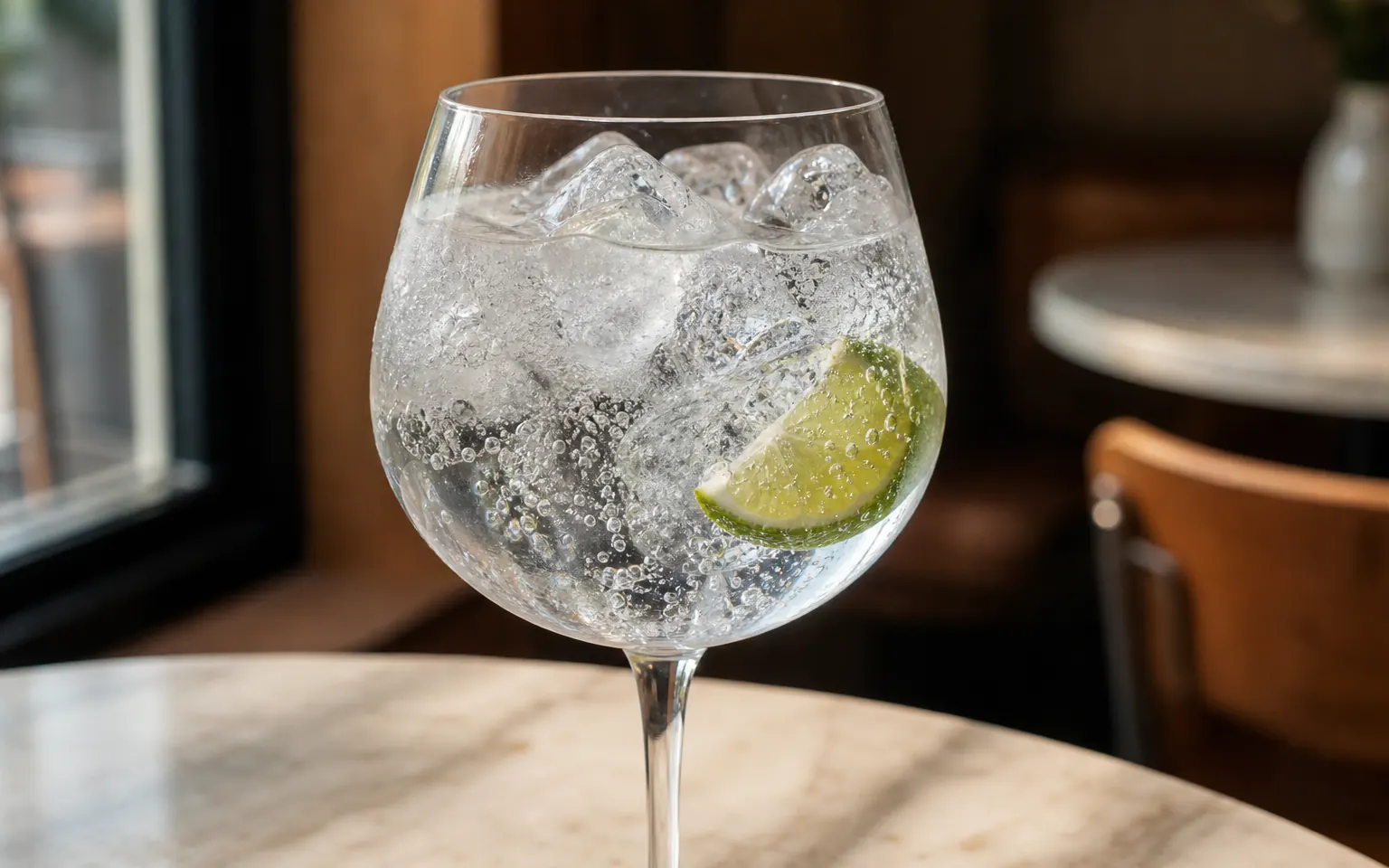
A glass packed with firm ice stays cold. Three small cubes warm and melt quickly, leaving a flat, watery drink.
Garnish is not a fruit salad
Use one aroma that supports the gin: lime for brightness, grapefruit for a drier citrus edge, or a restrained herb for a botanical gin.
This drink contains alcohol and is intended for adults of legal drinking age.
Recipe reference
Keep this recipe handy
Ingredients
- 45-50 ml (1.5-1.7 oz) gin
- 120-150 ml (4-5 oz) chilled tonic water
- A full glass of firm ice
- Lime, lemon, grapefruit peel, or a restrained herb garnish
Tools
- Highball or balloon glass
- Jigger
- Bar spoon
Method
- Chill the gin, tonic, and glass if possible.
- Fill the glass completely with ice.
- Add gin, then pour tonic slowly down the side.
- Lift once with a spoon.
- Add one garnish chosen to match the gin.
Use what you have
- Lighter drink: use 30 ml gin with 150 ml tonic.
- Tonic too sweet: replace one-third with plain soda.
- No lime: lemon or grapefruit peel works; omit garnish if it clashes.
If the result is off
- Flat: tonic was warm or stirred too much. Chill it and pour gently.
- Too bitter: the tonic ratio or quinine level is high. Use a lighter tonic or reduce the volume.
- Watery: too little ice melted quickly. A full glass melts more slowly.
- Garnish dominates: too much juice or too many botanicals. Use one peel or wedge.
Cost and effort
About US$2-7 per serving.
FAQ
What is the best Gin and Tonic ratio?
Start near 1 part gin to 3 parts tonic, then adjust for gin strength and tonic sweetness.
Should I squeeze lime into it?
A small squeeze is fine, but too much acid can flatten the botanicals.
Why use so much ice?
A full glass stays colder and usually dilutes more slowly than a few cubes.
Which tonic should I choose?
Start with a balanced neutral tonic, then explore drier or more aromatic styles.
Sources
- Tanqueray — London Dry Gin & Tonic
Tanqueray's official brand recipe uses 50 ml gin, 150 ml tonic, plenty of ice, and lime. BloomSipSip keeps a 45-50 ml gin and 120-150 ml tonic range so the reader can adjust for the chosen gin and tonic rather than treating one brand ratio as universal.