Calculate the alcohol before mixing
Millilitres alone do not tell you how strong the drink is. Vodka and coffee liqueur both contribute alcohol. Espresso and melted ice lower the final concentration, but they do not remove any of the pure alcohol already poured.
The estimates below assume 40% ABV vodka, Kahlúa Original at 16% ABV, and an ethanol density of 0.789 g/ml. Recalculate when your bottle labels differ.
| Option | Vodka | Coffee liqueur | Estimated pure alcohol | Estimated US standard drinks |
|---|---|---|---|---|
| IBA reference | 50 ml | 30 ml | 19.6 g | 1.4 |
| Drier home ratio | 40 ml | 15 ml | 14.5 g | 1.0 |
| Lighter ratio | 30 ml | 15 ml | 11.4 g | 0.8 |
These standard-drink figures use the US NIAAA definition of 14 g pure alcohol. Definitions differ by country, so the table is a comparison tool rather than a substitute for local guidance.
A precise finished ABV would also require the espresso volume and the amount of water melted during shaking. Ice, temperature, and technique vary at home. Pure alcohol in grams is therefore the clearer answer to how much alcohol went into one serving.
Start with the drier home ratio
Begin with 40 ml vodka + 15 ml coffee liqueur + 30 ml espresso. Keeping the liqueur low and omitting syrup makes it easier to identify whether coffee, sweetness, or alcohol needs adjustment.
The published IBA formula also uses 10 ml syrup. It is a useful classic reference, but liqueurs vary in sweetness and espresso can be acidic, bitter, or weak. At home, taste the shaken drink before adding 3–5 ml syrup.
If 14.5 g of pure alcohol is still more than you want, use the lighter ratio. Keep 30 ml espresso and reduce the vodka to 30 ml. For a further reduction, a complete zero-proof Espresso Martini structure will hold together better than repeatedly replacing alcohol with sugar.
Fix sweetness and harshness separately
When the drink is too sweet, reduce the coffee liqueur or omit syrup. When it tastes hot, sharp, or disjointed, first check the serving temperature and whether shaking provided enough dilution. Extra sugar can soften the first impression while burying the coffee.
If the espresso is too bitter, add a small amount of syrup rather than automatically increasing the liqueur. More liqueur changes sweetness, aroma, and alcohol at the same time.
Foam only needs to cover the surface
Fresh espresso gives the foam something to hold onto. A full shaker of firm ice chills quickly, while a hard shake incorporates air. Coffee that has sat too long, too little ice, or a timid shake all produce a thinner cap.
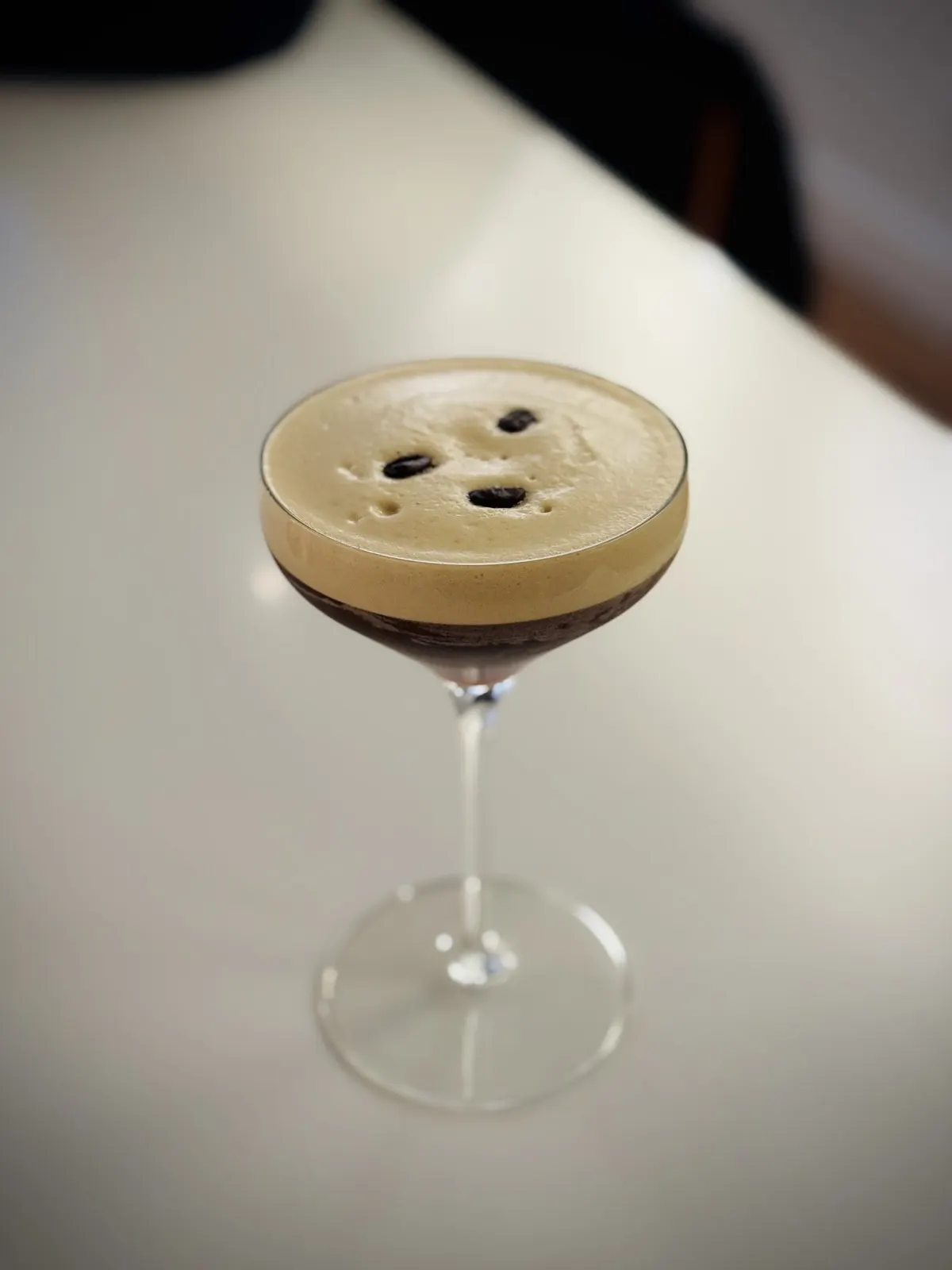
Let the hottest steam escape from fresh espresso, shake everything firmly for 12–15 seconds, and strain immediately into a chilled glass. Foam that covers the surface and lasts through the first few sips has done its job. Extending the shake for a photograph can add more water without improving the drink.
Without an espresso machine, use 30–35 ml concentrated moka-pot coffee and expect less foam. Without coffee liqueur, strong coffee plus a little syrup can make an approximation, but the texture and rounded vanilla-caramel notes will change.
One more boundary before drinking
An Espresso Martini contains both alcohol and caffeine. Caffeine may make someone feel more alert, but it does not reduce alcohol’s effects on the body. Do not choose this drink before driving, when under the legal drinking age, during pregnancy, or whenever alcohol should be avoided. People sensitive to caffeine should also consider the time of day.
Recipe reference
Keep this recipe handy
Ingredients
- 40 ml (1.35 oz) vodka
- 30 ml (1 oz) fresh espresso
- 15 ml (0.5 oz) coffee liqueur
- Optional: 0-5 ml simple syrup
- A full shaker of firm ice
Tools
- Cocktail shaker
- Jigger
- Fine strainer
- Chilled coupe or martini glass
Method
- Chill the serving glass.
- Brew espresso and let it release its hottest steam for about 30 seconds.
- Add vodka, coffee liqueur, espresso, and optional syrup to an ice-filled shaker.
- Shake hard for 12-15 seconds.
- Double-strain immediately into the chilled glass.
Use what you have
- No espresso machine: use 30-35 ml concentrated moka coffee.
- No coffee liqueur: use 15 ml simple syrup plus 10-15 ml strong coffee, but the texture will be thinner.
- Lower alcohol: use 30 ml vodka, 15 ml liqueur, and keep 30 ml espresso.
- No alcohol: use the dedicated zero-proof Espresso Martini structure rather than simply omitting vodka.
If the result is off
- No foam: the coffee sat too long, the shake was weak, or the shaker was underfilled. Use fresh espresso and firm ice.
- Too sweet: the liqueur is sweet enough on its own. Omit syrup and reduce liqueur to 15 ml if needed.
- Watery: soft ice or a long shake caused excess dilution. Use firm ice and stop once the shaker is cold.
- Harsh alcohol: the drink is warm or under-diluted. Shake harder before adding more sugar.
Cost and effort
Usually US$2-6 per serving at home, depending on the spirits and coffee.
FAQ
Why does an Espresso Martini foam?
Fresh espresso and hard shaking introduce air; coffee compounds help hold the foam briefly.
Do I need to cool the espresso completely?
No. Let the hottest steam escape, then shake it immediately with plenty of firm ice.
Which coffee liqueur should I use?
Choose based on sweetness and coffee intensity. Drier liqueurs give you more control.
Can I make a lower-alcohol version?
Yes. Reduce vodka and liqueur while keeping the espresso concentrated.
How much alcohol is in an Espresso Martini?
With 40 ml of 40% ABV vodka and 15 ml of 16% ABV coffee liqueur, the drink contains about 14.5 g of pure alcohol, or roughly 1.0 US standard drink. Different bottle strengths and measures change the result.
Sources
- International Bartenders Association: Espresso Martini
Used for the classic ingredient structure, shaking, and straining method. The home ratio below starts drier so sweetness is easier to diagnose.
- NIAAA: What Is A Standard Drink?
Used for the US standard drink definition of 14 g pure alcohol. Definitions vary by country.
- Kahlúa Original Coffee Liqueur
Used for the listed 16% ABV of Kahlúa Original. Check the bottle used at home.
- CDC: Effects of Mixing Alcohol and Caffeine
Used for the warning that caffeine does not reduce alcohol's effects on the body.