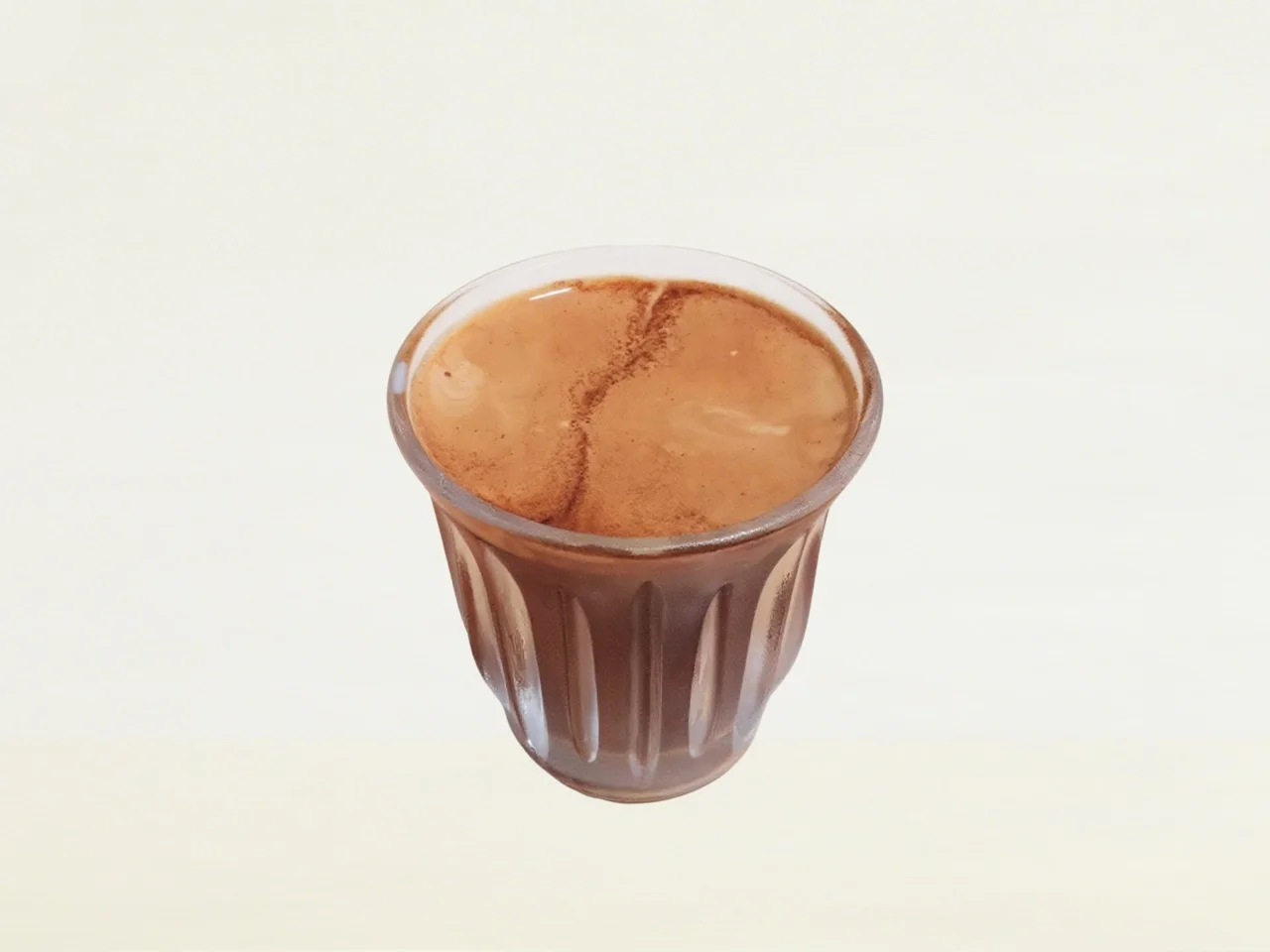
Keep the drink small
I treat Dirty Coffee as a short drink to finish while the temperature contrast is still obvious. In a 160-220 ml glass, 120-150 ml cold milk leaves enough room for a 30-40 ml hot shot without stretching the coffee thin.
A large tumbler invites more milk. The color may still look right, but the aroma and concentration drift toward an ordinary iced latte. When the drink tastes milk-heavy, reduce the milk or change the glass before adding another shot.
The layer is temporary
Chill both the milk and the glass. Brew the coffee at the last moment and let it run slowly down the side, over a cold spoon, or onto the milk surface. A high, fast pour drives the coffee straight through the milk.
The dividing line does not need to look perfect. If the top still smells like hot coffee, the opening sip is concentrated, and the next sips become colder and softer, the drink has kept its character. The temperatures will equalize if it waits.
Choose the closest coffee method you own
Espresso is the cleanest option. A short capsule works well, and 35-45 ml concentrated moka-pot coffee makes a softer but useful version. Keep the glass small even when the visual separation is weaker.
Standard drip coffee or a full Americano brings too much water. In that case, a well-balanced cold coffee with milk is a better outcome than adding more liquid just to preserve the Dirty Coffee label.
Milk changes the balance
Whole milk makes the transition easiest to notice. Oat milk adds sweetness and grain flavor, so weak coffee can disappear underneath it. Low-fat milk feels lighter but also less creamy.
Use syrup only after checking the extraction. If the coffee is still sharply bitter, about 5 ml can soften it. Sweetness cannot repair a burnt or heavily over-extracted shot.
Drink without stirring. Changing flavor across the first few sips, cold milk underneath, and no long finish of plain milk are more useful success tests than a ruler-straight layer.
Recipe reference
Keep this recipe handy
Ingredients
- 120-150 ml (4-5 oz) very cold whole milk
- 30-40 ml (1-1.3 oz) fresh hot espresso
- Optional: 5-8 ml simple syrup only if the coffee is sharply bitter
Tools
- Espresso machine, moka pot, or capsule machine
- Small clear glass, ideally 160-220 ml
- A spoon or the side of the glass for a slow pour
Method
- Chill the glass and milk thoroughly.
- Pour 120-150 ml cold milk into the small glass.
- Brew 30-40 ml concentrated coffee immediately before serving.
- Pour the hot coffee slowly over the side of the glass or the back of a spoon.
- Serve at once and drink without stirring so each sip changes.
Use what you have
- No espresso machine: use 35-45 ml concentrated moka-pot coffee; the separation will be softer.
- No moka pot: use the smallest, strongest capsule setting rather than diluted drip coffee.
- Want a lighter drink: use low-fat or oat milk, but expect a thinner texture and less stable visual separation.
If the result is off
- No visible layer: the milk was not cold enough or the coffee was poured too quickly. Chill both glass and milk, then slow the pour.
- It tastes like a regular latte: the glass or milk volume is too large. Keep the total drink small.
- The first sip tastes only of milk: the coffee is too weak. Use espresso, a strong capsule, or concentrated moka coffee.
- It is aggressively bitter: use a rounder medium-dark roast or add only 5-8 ml syrup.
Cost and effort
At home, the drink usually costs about US$0.75-2 depending on the coffee and milk. A capsule version costs more but needs less equipment.
FAQ
Should Dirty Coffee contain ice?
Usually no. Ice dilutes the milk and occupies the small volume needed for a strong temperature contrast.
Should I stir Dirty Coffee?
No. The changing ratio of hot coffee to cold milk is the point of the drink.
Can I make it without an espresso machine?
Yes. Concentrated moka-pot or capsule coffee is the closest practical substitute.
Why does mine not form layers?
The usual causes are warm milk, a large glass, weak coffee, or pouring too fast.
Sources
- BloomSipSip Dirty Coffee preparation and photo record
Used to check small-glass volume, hot-cold order, and failures observed in a home setup.